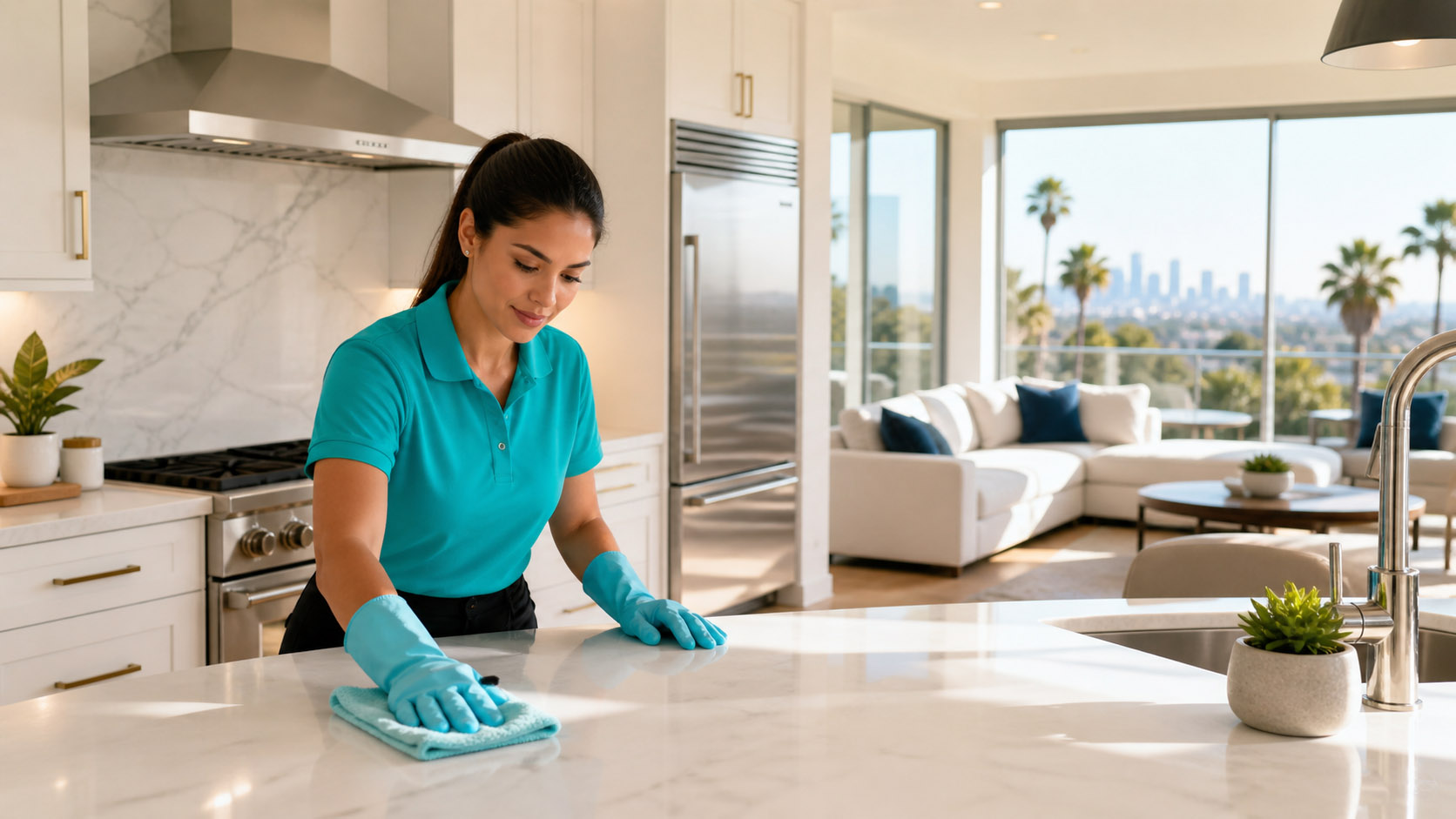
A professional deep cleaning can take anywhere from a few hours to most of a day, depending on the home’s size, condition, number of bathrooms, and level of buildup. A small, regularly maintained apartment may take two to four hours, while a larger house or a home needing detailed attention can take six hours or longer. The number of cleaners also changes the elapsed time.
A practical deep-cleaning timeline
When people ask how long does deep cleaning take, the most useful answer is not a single number. Deep cleaning time depends on both the work required and how many cleaners are working at once. For example, six labor-hours could mean one cleaner working for six hours or two cleaners working for about three hours.
The timeline below offers planning ranges for homes that have typical furniture and belongings. It is not a promise of service duration, since the actual condition of each home can vary substantially.
| Home type | Typical deep-cleaning time | Why timing varies |
|---|---|---|
| Studio or one-bedroom apartment | About 2–4 hours | One bathroom, compact kitchen, clutter level, and buildup on high-use surfaces |
| Two-bedroom apartment or condo | About 3–6 hours | Additional bedroom, bathrooms, kitchen use, pets, and floor area |
| Three-bedroom home | About 5–8 hours | More rooms, multiple bathrooms, stairs, and detailed kitchen or bathroom work |
| Larger home or heavy-detail project | About 6 hours or more | Square footage, accumulated buildup, several bathrooms, pet hair, and occupied spaces |
These are elapsed-time ranges for a cleaning visit, not a measure of how clean a home “should” be. A well-maintained three-bedroom home may take less time than a smaller rental with months of kitchen grease, shower buildup, or extensive pet hair.
What happens during the visit
A deep clean generally takes longer than a routine visit because the work focuses on detail, buildup, and areas that are easier to skip during regular upkeep. The order can change from home to home, but many professional cleaning visits follow a similar progression.
First 30–60 minutes: walkthrough and high-priority areas
Cleaners typically begin by assessing room conditions and organizing their workflow. Kitchens and bathrooms often receive early attention because products or methods may need time to work on visible buildup. In a busy Los Angeles household, entryways, hard floors, and frequently touched surfaces can also be priorities.
Middle of the visit: room-by-room detail work
This is usually the longest part of the appointment. Time is spent moving through bedrooms, living areas, bathrooms, and the kitchen. Rooms with more furniture, personal items, or surfaces naturally take longer to clean carefully.
Final portion: floors, touchpoints, and review
Floors are often completed after higher surfaces so dust and debris can be collected efficiently. The final stage may include a room-by-room check and attention to missed details. In multi-level houses, travel between floors and bathrooms can add time compared with a similarly sized single-level condo.
The biggest factors that change cleaning time
How long does house cleaning take when it is a deep clean? These factors usually have a greater effect than the bedroom count alone.
- Current condition: Dust is generally faster to address than sticky residue, soap buildup, grease, or long-standing grime.
- Bathrooms: Additional bathrooms often add meaningful time because they contain several detail-oriented surfaces and fixtures.
- Kitchen use: A lightly used kitchen and a heavily used family kitchen can require very different amounts of effort.
- Pets: Pet hair, paw marks, litter tracking, and fur on upholstery-adjacent areas can increase the work involved.
- Clutter and access: Cleaners need reasonable access to surfaces and floors. Many belongings do not necessarily make a home dirty, but they can slow detailed cleaning.
- Furniture and layout: Stairs, large furnishings, small rooms, and split-level layouts affect how quickly a team can move through a home.
- Vacancy status: An empty rental can allow easier access to floors and surfaces, while an occupied home may require more careful navigation.
Helpful planning tip: Ask whether an estimate refers to total labor-hours or the time the cleaning team will be in your home. This distinction makes it easier to plan around work calls, school pickup, building access, or landlord walkthroughs.
How to estimate time by room
If you are trying to understand how long it takes to clean a house, looking at the rooms is often more useful than relying on square footage alone. A 1,500-square-foot home with one bathroom and a simple layout may take less time than a smaller condo with two bathrooms, a heavily used kitchen, and pets.
Rooms that commonly require the most time
- Kitchen: Cabinets, counters, appliance exteriors, sink areas, backsplash, and floors can involve different types of buildup.
- Bathrooms: Showers, tubs, toilets, sinks, mirrors, and tile areas require concentrated detail work.
- Living areas: These may be quick in minimally furnished spaces or more involved where there are many surfaces, pet hair, and high traffic.
- Bedrooms: Timing depends on the number of rooms, furnishings, and accessible surfaces.
For renters preparing for a move, timing can also depend on what remains in the unit. Empty apartments can be easier to access, but a vacant space with neglected appliances, blinds, or bathroom buildup may still need substantial attention. Property managers and landlords may have their own turnover expectations, so it is useful to confirm those requirements separately.
Ways to help the appointment run smoothly
You do not need to pre-clean before a professional visit. However, a few practical preparations can help cleaners spend more time on cleaning rather than searching for access or working around obstacles.
- Pick up loose clothing, toys, papers, and personal items from floors and counters where possible.
- Secure pets or make a plan for their comfort during the visit.
- Share building entry instructions, parking considerations, and elevator details for Los Angeles apartments or condos.
- Identify rooms or concerns that matter most, such as a shower with buildup or a heavily used kitchen.
- Let household members know which areas will be in use during the appointment.
- Plan enough time for the visit rather than scheduling an immediate event or move-in directly afterward.
Deep cleaning versus routine cleaning time
Routine cleaning is intended to maintain a home that is already in manageable condition. Deep cleaning usually takes longer because it addresses more detail and accumulated soil. If you are comparing service types, review the scope and ask which areas are priorities rather than assuming every visit follows the same timeline.
For an overview of the type of project commonly described as a deep clean, see Aquamarine Pro Team’s deep cleaning service information. The appropriate timeline depends on the condition of your specific home and the work requested.
Planning around a deep-cleaning appointment
How long do house cleaners take in an occupied home? Plan for a window rather than an exact finish time, especially for an initial deep clean. Homes reveal their needs as the work progresses, and high-use kitchens, bathrooms, and pet areas may need more attention than expected.
If you work from home, choose a room that can remain available to you while other spaces are cleaned. For apartments with shared parking, gated entry, or elevator reservations, arrange access in advance. For a house being prepared for guests, a move, or a landlord inspection, schedule with a buffer so the cleaning timeline does not overlap with deliveries, movers, or a final walkthrough.
Frequently Asked Questions
How long does a deep cleaning take for a two-bedroom apartment?
A two-bedroom apartment or condo often takes about three to six hours for a deep clean. The number of bathrooms, kitchen condition, pet hair, clutter, and the number of cleaners can move the timeline shorter or longer.
Does a team of cleaners make the appointment faster?
Usually, yes. More than one cleaner can reduce the elapsed time because rooms can be cleaned simultaneously. However, the total labor involved may be similar, and compact spaces may limit how efficiently multiple people can work at once.
Why can a smaller home take longer than expected?
Size is only one factor. A small home may take longer when bathrooms have buildup, the kitchen is heavily used, pets shed frequently, or surfaces and floors are difficult to access because of belongings or furniture.
Should I be home during a professional deep cleaning?
That depends on your preference and access arrangements. Being available at the beginning can help communicate priorities, but many people also plan to work from another room or be away during the visit. Confirm access needs and timing before the appointment.
How can I get a more accurate estimate for my home?
Share the number of bedrooms and bathrooms, whether pets live in the home, the home’s current condition, and any priority areas. Mention practical details such as stairs, parking, gated access, elevators, and whether the home is occupied or vacant.
Choose the Cleaning Level That Fits Your Home
If your home needs a more detailed reset,
explore Aquamarine Pro Team’s
professional deep cleaning service.