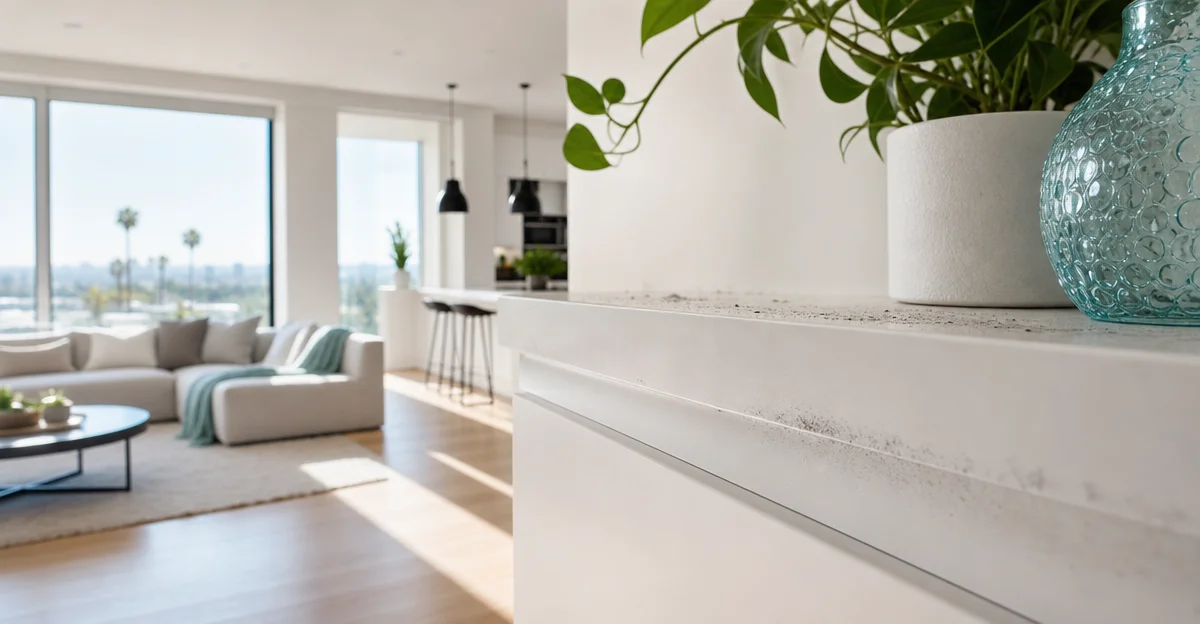
Regular cleaning usually focuses on the visible, frequently used parts of a home: floors, counters, sinks, toilets, and surfaces at eye level. The areas missed during regular cleaning are usually high, low, hidden, or awkward to reach, such as baseboards, vent covers, cabinet fronts, shower tracks, appliance edges, and light switches. Over time, these overlooked spots can make an otherwise clean home feel dusty or grimy.
Why routine cleaning misses certain areas
Most cleaning routines are built around speed and daily comfort. In a busy Los Angeles apartment, condo, or house, it makes sense to prioritize dishes, laundry, bathrooms, floors, and obvious spills. The tradeoff is that detail work tends to wait.
Missed areas usually have one or more of these traits:
- They are above shoulder height or close to the floor.
- They are behind furniture, appliances, or doors.
- They do not look dirty until buildup becomes noticeable.
- They require moving items, using a crevice tool, or spending extra time.
- They collect residue gradually, such as dust, soap scum, grease, or pet hair.
A useful rule: If a surface is not touched, seen, or vacuumed during a normal week, add it to a monthly or seasonal checklist.
Bathroom areas commonly overlooked
Bathrooms receive regular attention, but a quick wipe-down does not always reach the places where moisture and product residue collect. This is one reason people looking into bathroom deep cleaning services often notice a difference in the details rather than just the shine of the sink.
Shower tracks, corners, and fixtures
Shower-door tracks can hold hair, dust, and moisture. Tile corners, grout lines, the area around faucet handles, and the bottom edges of shower doors are also easy to skip when cleaning is rushed. Check the showerhead, tub overflow plate, and the wall behind shampoo bottles as well.
Toilet exterior and surrounding floor
The toilet bowl may be cleaned regularly while the hinges, base, sides, and floor around it get less attention. The narrow space between the toilet and wall is especially easy to overlook. A careful bathroom routine also includes the flush handle, toilet-paper holder, light switches, and door handle.
Vanity details
Look beyond the countertop to cabinet pulls, drawer fronts, the underside of the sink rim, backsplash edges, mirror corners, and the area behind small appliances. In shared bathrooms, hair tools, cosmetics, and containers can hide dust and residue underneath.
A professional deep cleaning is often considered when these detail areas have accumulated buildup that routine care has not addressed.
Kitchen spots that need more than a quick wipe
Kitchen deep cleaning services are commonly researched when grease, crumbs, and fingerprints have built up in the places daily cooking leaves behind. Even homes that look tidy can have missed kitchen zones.
Appliance exteriors and edges
Pay attention to refrigerator handles, water dispensers, microwave buttons, oven knobs, and dishwasher controls. Crumbs and dust can collect along the sides of the stove, beneath the refrigerator door seal, and in the narrow gap between appliances and cabinets. Always use an approach appropriate for the appliance manufacturer’s guidance.
Cabinet fronts, pulls, and lower trim
Cabinet doors near the stove and trash area often collect a light film that is not immediately obvious. Lower cabinets, toe kicks, and baseboards can also gather splatters, dust, and pet hair. The top edge of upper cabinets is another classic missed spot.
Small but high-contact surfaces
Light switches, outlet covers, pantry handles, trash-can lids, faucet bases, and the wall behind the sink can be overlooked. In rentals, these details are worth checking before a landlord or property manager walkthrough, especially if the kitchen has been used heavily.
Kitchen detail checklist
- Wipe cabinet faces, handles, and toe kicks.
- Check stove sides, knobs, and the wall behind the range.
- Clean crumbs from drawer interiors and utensil organizers.
- Inspect refrigerator shelves, seals, and the floor underneath where accessible.
- Dust high cabinet tops, vents, and ceiling-adjacent corners.
Living areas: the dust collectors in plain sight
Living rooms and bedrooms can appear clean after vacuuming, but fine dust settles well beyond the center of the floor. This is particularly noticeable in homes with pets, open windows, upholstered furniture, or busy households.
Baseboards, corners, and vents
Baseboards collect dust close to the floor, especially behind sofas, beds, and media consoles. Ceiling corners may develop cobwebs, while return vents and vent covers can become dusty. These areas are often missed because they are not part of the fastest path through a room.
Furniture touchpoints and hidden surfaces
Consider lamp switches, remote controls, door frames, window sills, blinds, and the tops of picture frames. Upholstered furniture can also hold crumbs and pet hair beneath cushions. Under-bed areas, behind nightstands, and beneath movable furniture are easy to postpone until a more thorough reset.
Entryways, laundry spaces, and forgotten transition zones
Transition areas collect what the rest of the home brings in. Entry doors, interior door handles, shoe storage, coat hooks, and wall corners near walkways may show fingerprints or dust. Laundry areas can collect lint around machines, detergent residue on shelves, and debris behind hampers.
For Los Angeles households, entryway floors may also pick up dust and outdoor debris more quickly during dry periods. A regular sweep helps, but door trim, thresholds, and the base of the wall need occasional attention too.
How to decide whether a deeper reset is needed
Missing a few details during regular cleaning is normal. It may be time to plan a more thorough room-by-room clean when you notice persistent dust along edges, sticky cabinet fronts, dull bathroom fixtures, odors around hidden areas, or buildup that returns quickly after surface cleaning.
If you are unsure where routine cleaning ends and deeper work begins, review the difference between deep cleaning and standard cleaning. For timing guidance, see how often to deep clean a home.
A practical rotation for overlooked areas
| Frequency | Areas to add |
|---|---|
| Weekly | Light switches, door handles, toilet exterior, cabinet pulls, shower-door tracks |
| Monthly | Baseboards, vents, appliance exteriors, blinds, furniture crevices, under-sink cabinets |
| Seasonally or as needed | Behind movable furniture, high cabinet tops, refrigerator edges, detailed grout and shower fixtures |
For a first cleaning in a new home, after a busy season, or before a rental transition, detail work may take longer than expected. Learn why on our guide to why the first professional cleaning usually takes longer.
Frequently Asked Questions
What is most commonly missed when cleaning a bathroom?
Frequently missed bathroom areas include shower tracks, grout corners, faucet bases, toilet hinges and exterior surfaces, cabinet pulls, light switches, and the floor around the toilet. These spots collect moisture, soap residue, dust, and hair over time.
What kitchen areas should be cleaned beyond countertops?
Check cabinet fronts and handles, appliance controls, stove edges, toe kicks, refrigerator seals, drawer interiors, backsplash edges, and the floor beside appliances. These areas can collect grease, crumbs, fingerprints, and dust even when counters are clean.
How often should I clean baseboards and vents?
Many households add baseboards and vent covers to a monthly cleaning rotation, then address behind furniture and higher dusting areas seasonally or when visible dust appears. Homes with pets or heavy foot traffic may need more frequent attention.
Is regular cleaning enough for a move-out or landlord walkthrough?
That depends on the condition of the rental and any requirements in the lease. Before a walkthrough, inspect hidden and detail areas such as appliance edges, cabinet interiors, bathroom fixtures, baseboards, and floors behind movable items. Review your lease and communicate with the landlord or property manager about expectations.
Choose the Cleaning Level That Fits Your Home
If your home needs a more detailed reset,
explore Aquamarine Pro Team’s
professional deep cleaning service.