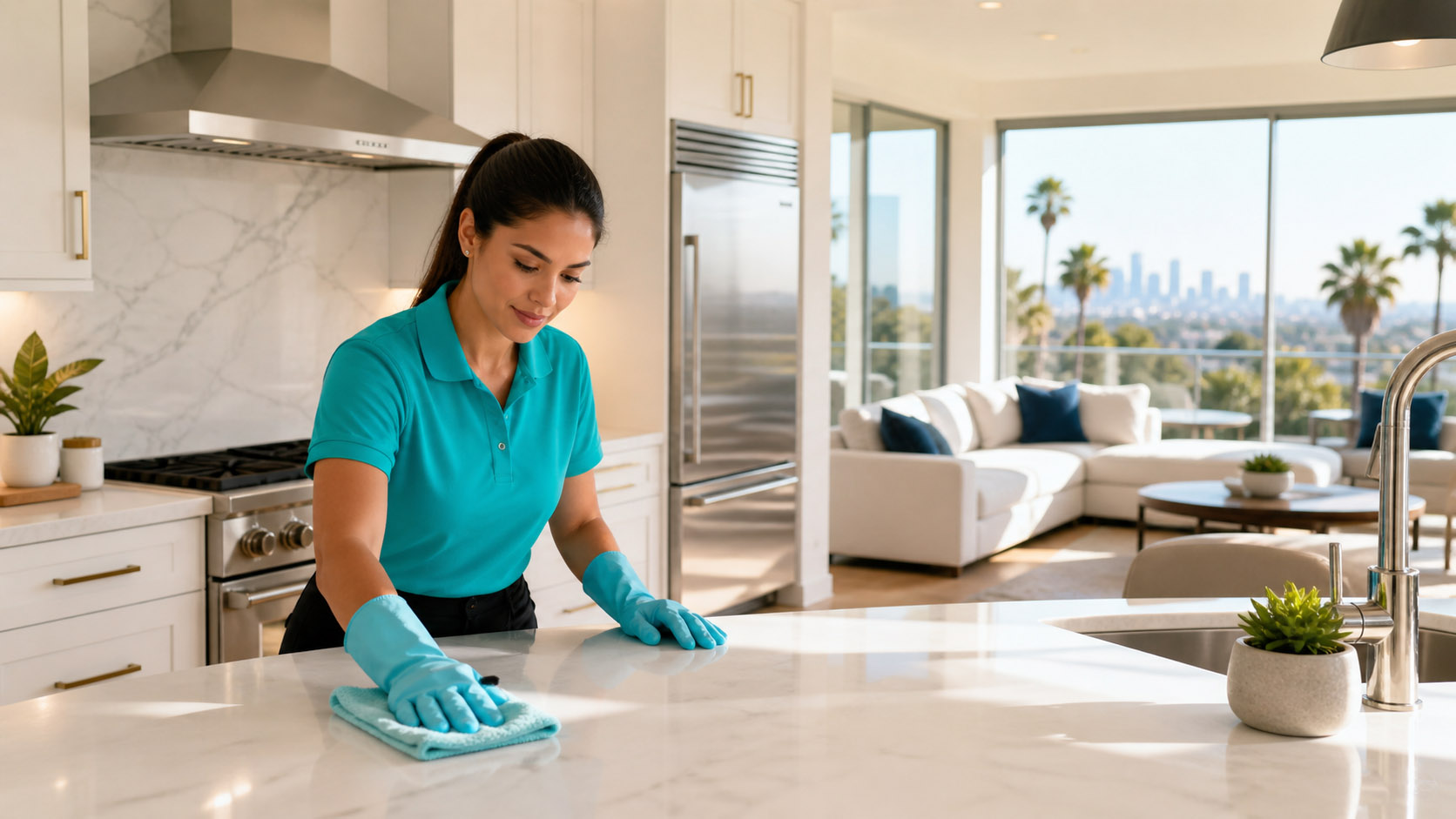

For homeowners comparing deep cleaning vs standard cleaning, the main difference is the level of detail. Standard cleaning focuses on routine upkeep of visible surfaces and commonly used areas. Deep cleaning goes further into accumulated dust, buildup, overlooked surfaces, and detailed tasks that are not usually needed at every visit. Many Los Angeles households use routine cleaning for maintenance and schedule a deeper reset when conditions call for it.
At-a-glance comparison
| Area of focus | Standard cleaning | Deep cleaning |
|---|---|---|
| Primary purpose | Maintains a generally tidy, usable home between more detailed cleanings. | Addresses accumulated grime, dust, and neglected detail work. |
| Frequency | Often part of a recurring routine. | Usually scheduled occasionally, before a new routine, or after a change in the home. |
| Visible surfaces | Typically focuses on everyday surfaces, floors, and bathrooms. | Includes everyday surfaces plus more detailed attention to edges, buildup, and harder-to-reach areas. |
| Time and detail | Designed for regular upkeep. | More detail-oriented and generally more time-intensive. |
| Best fit | Homes that are already being maintained consistently. | Homes that need a thorough reset or have missed routine cleanings. |
Exact task lists can vary by provider, home condition, and the rooms being cleaned. Before scheduling, it is helpful to review the scope of a service rather than assuming every cleaning includes the same detailed work.
What standard house cleaning is designed to do
Standard house cleaning is the practical foundation of a regular home-care routine. It concentrates on the areas that become untidy through normal daily living: kitchen counters, bathroom surfaces, floors, dust on accessible furniture, and general straightening of cleaning-related surfaces.
For a busy household, this kind of visit helps prevent everyday messes from becoming overwhelming. It can be especially useful for Los Angeles apartments and condos, where compact kitchens and bathrooms see frequent use, as well as family homes managing work schedules, pets, and school activities.
Common priorities during routine cleaning
- Removing routine dust from accessible surfaces
- Cleaning kitchen and bathroom surfaces
- Vacuuming or mopping regularly used floors
- Emptying waste where included in the agreed scope
- Refreshing the rooms used most often
Routine service is most effective when the home is already in reasonably manageable condition. It is maintenance, not necessarily a substitute for periodic detail cleaning. Readers comparing a recurring option can review Aquamarine Pro Team’s standard cleaning service for service-specific information.
What makes deep house cleaning different
Deep house cleaning is a more detailed process for areas that are easy to overlook during weekly or biweekly upkeep. It is often chosen when dust, grease, soap residue, pet hair, or general buildup has had time to collect. Rather than simply refreshing a room, the goal is to make the space feel more thoroughly reset.
Depending on the agreed checklist and the condition of the home, deep cleaning may place extra attention on details such as baseboards, doors, light switches, cabinet exteriors, fixtures, edges, and less-accessible surfaces. Kitchen and bathroom areas often need the most detailed work because residue builds up there more quickly.
A useful distinction: A deep cleaning is not defined only by how dirty a home appears. It is defined by the amount of detailed work needed beyond routine maintenance. A tidy-looking condo may still benefit from a deeper clean after a long stretch without detailed attention.
For an overview of the more comprehensive option, see the deep cleaning service page. The final scope should always be confirmed for the specific home and appointment.
When each option makes sense
Choose standard cleaning when maintenance is the main goal
Standard cleaning may be the better fit when you have an established routine and want help keeping the home presentable. For example, a household that regularly wipes down the kitchen, stays on top of clutter, and has no major buildup may only need consistent maintenance.
Consider deep cleaning when the home needs a reset
A deeper clean can be useful after several missed cleaning cycles, after a busy season, before beginning a recurring routine, or when detailed areas have been neglected. It may also make sense for a rental between occupants, although renters, landlords, and property managers should confirm their own lease or turnover requirements rather than assuming a general cleaning meets them.
Signs a deeper clean may be more appropriate:
- Dust is collecting along edges, vents, or baseboards.
- Kitchen grease or bathroom residue has built up over time.
- Pet hair is gathering in corners and under accessible furniture.
- The home has not had a detailed cleaning in several months.
- You are preparing for guests, a move-related transition, or a new maintenance schedule.
Room-by-room examples
Kitchen
Routine work generally centers on keeping frequently used surfaces and floors clean. A deep clean may spend more time on splatters, grease-prone areas, cabinet fronts, handles, and the edges around appliances. The condition of the kitchen matters: a lightly used kitchen needs a different level of effort than one used for daily family meals.
Bathroom
Standard cleaning typically addresses the sink, toilet, shower or tub surfaces, mirror, and floor. Deep cleaning may focus more closely on soap residue, mineral buildup, grout-adjacent edges, fixture details, and areas behind or around frequently used items.
Living areas and bedrooms
Routine cleaning helps control dust and floor debris in the spaces people use daily. During a deep cleaning, the emphasis may extend to baseboards, doors, blinds, reachable corners, and other surfaces that do not need attention every week. Homes with pets often need a more frequent review of hair and dander-prone areas.
How to choose without overcleaning or undercleaning
- Assess the current condition. Look beyond countertops and open floor space. Check corners, bathroom edges, cabinet fronts, and areas behind frequently moved items.
- Consider your recent routine. A home that has been maintained weekly has different needs from one that has gone months without detailed cleaning.
- Think about household use. Children, pets, cooking habits, remote work, and the number of occupants can all affect how quickly a home needs attention.
- Identify the goal. Are you maintaining a comfortable home, catching up after a busy period, or preparing for a rental transition?
- Confirm the checklist. Ask what is included, what requires extra time, and whether particular areas need to be prioritized.
Practical approach: Many households start with a detailed reset and then use regular cleaning to maintain it. Others only need standard cleaning with occasional targeted attention to kitchens, bathrooms, or pet-heavy spaces.
The difference is detail, not just frequency
Deep cleaning and standard cleaning can work together, but they solve different problems. Standard cleaning supports the day-to-day rhythm of a home. Deep cleaning addresses the detail work that gradually falls outside that rhythm. Choosing between them comes down to the home’s condition, how it is used, and the level of cleaning needed now—not simply whether the space is large or small.
Frequently Asked Questions
Is deep cleaning the same as move-out cleaning?
Not necessarily. Deep cleaning describes a more detailed level of cleaning, while move-out cleaning may involve additional requirements set by a lease, landlord, property manager, or incoming occupant. Confirm the required checklist for a rental or move-related situation.
How often should a home have a deep cleaning?
There is no single schedule that fits every home. The right timing depends on household size, pets, cooking habits, allergies or sensitivities, how often routine cleaning happens, and the amount of visible buildup. Many people schedule a deeper clean when regular maintenance is no longer keeping up.
Can standard cleaning keep a home clean after a deep cleaning?
Yes. A routine cleaning schedule can help maintain the results of a more detailed reset by addressing the surfaces and floors that get dirty through daily use. Occasional detailed work may still be needed as dust and buildup return in overlooked areas.
Should I choose deep cleaning for a Los Angeles apartment or condo?
Apartment and condo size does not determine the answer on its own. A smaller home can need deep cleaning if kitchen grease, bathroom residue, pet hair, or dust has accumulated. Consider the condition of the space and whether routine cleaning has been consistent.
Choose the Cleaning Level That Fits Your Home
If your home needs a more detailed reset,
explore Aquamarine Pro Team’s
professional deep cleaning service.